Imagine this moment: a term sheet is on the table, diligence is underway, and the conversation suddenly slows, not because of your product or traction, but because of your valuation. Questions surface around assumptions, comparables and how the number was actually derived. What felt acceptable a few months ago is now under intense scrutiny.
This scenario is becoming increasingly common.
As regulatory oversight tightens and investor expectations mature, startup valuations are no longer treated as directional estimates. They are formal, reviewable documents, expected to withstand investor diligence, audit review and, in some cases, regulatory examination.
This is where IVS-aligned valuations come into focus. With the latest International Valuation Standards now in effect, startups and inbound investors are being nudged towards valuation practices that are structured, transparent and defensible. For businesses entering India, this shift is less about conservatism and more about risk reduction and credibility.
Why valuations are under sharper focus today
Over the past few years, both regulators and market participants have moved towards principle-based valuation frameworks. The updated IVS framework, effective from 31 January 2025, strengthens expectations around:
- Clear documentation of assumptions
- Appropriate selection and application of valuation methods
- Use of sensitivity analysis to test key value drivers
- Transparent reporting that can stand up to independent review
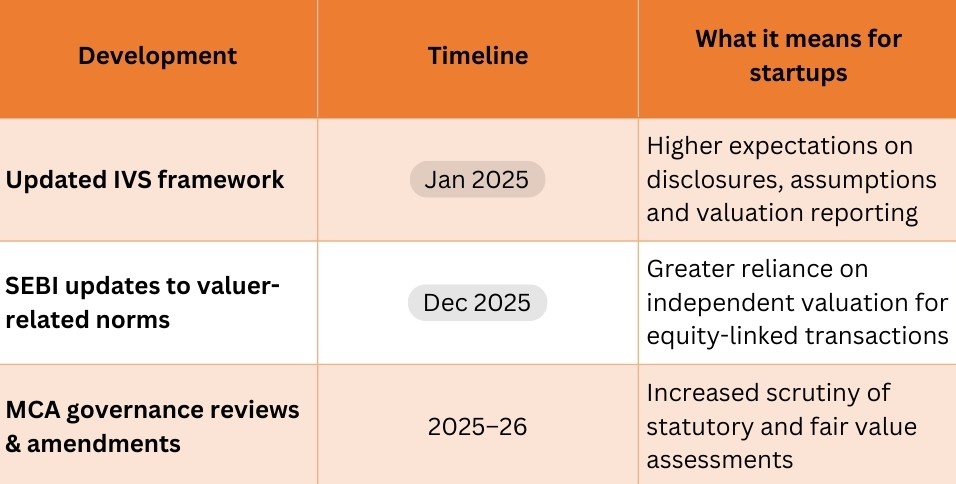
In parallel, Indian regulators such as SEBI and the Ministry of Corporate Affairs (MCA) have continued to reinforce the importance of robust, independent valuations, particularly for equity issuances, ESOPs and related-party transactions.
The message is clear: valuations that lack structure or audit-ready documentation are more likely to be challenged.
Key regulatory developments shaping valuation practices
What does an IVS-aligned valuation actually change?
IVS alignment does not aim to inflate or suppress valuations. Instead, it introduces discipline into how value is determined and explained.
In practical terms, this means:
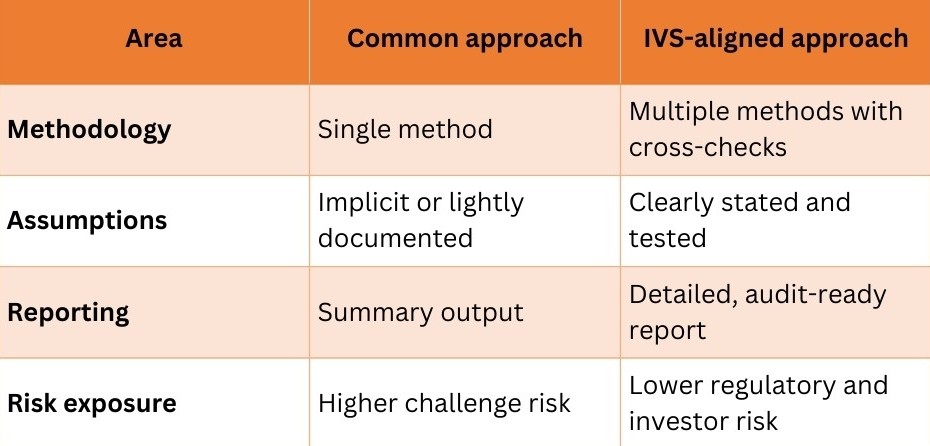
- Applying more than one valuation method where appropriate, rather than relying on a single multiple
- Clearly documenting business assumptions and judgment calls
- Testing outcomes through sensitivity analysis
- Ensuring independence and review-ready reporting
The outcome is not just a number, but a valuation that can be confidently defended.
Typical startup valuation vs IVS-aligned approach
Why this matters for founders and inbound investors
For founders, IVS-aligned valuations help:
- Build trust with institutional investors
- Avoid valuation-related delays during due diligence
- Reduce last-minute revisions before funding or exits
For global investors entering India, they reduce:
- Re-valuation risk in follow-on rounds
- Regulatory or tax-related disputes
- Uncertainty during audits and compliance reviews
In short, better valuation discipline today leads to smoother transactions tomorrow.
How Walmond supports IVS-aligned valuations
Walmond Consultancy LLP works with startups, investors and inbound businesses to:
- Assess valuation readiness and risk exposure
- Align valuation methodologies with IVS principles
- Coordinate with independent registered valuers
- Ensure valuations meet India’s regulatory and governance expectations
Our approach focuses on clarity, consistency and practical risk mitigation.
If you are planning a fundraise, an ESOP issuance, or an India market entry, now is the right time to review your valuation approach.
For a free assessment, fill out this form, and our team will share a clear view of your IVS readiness along with recommended next steps.